SELOCHAN, Viberto

ISBN 978-1-922527-80-6
PAPERBACK

The Portuguese Lady’s Earrings

The Portuguese Lady’s Earrings covers the rich tapestry of the de Oliveira Evora family. Their rise to power and wealth began with their role in the Portuguese Empire, the Church predominantly through Jesuits, and with military regimes. Jewish money financed the family’s business from the spice trade to trading people and ownership of sugar plantations in Brazil.

In 1940, Portugal was under the dictatorship of President Antonio de Oliveira Salazar who was ambivalent about Jewish refugees flooding Lisbon. Sitting on the Atlantic, the City on the Tagus from where explorers launched the ‘Age of Discovery’ became a perfect port to flee from the Nazis.

The Establishment de Oliveira Evora family remained well entrenched in the business community and to a lesser extent with the Salazar government. It, however, maintained a strong relationship with the country’s centuries old established, successful and integrated Jewish community.

Follow Lia Maria who entwines herself with Tascha, a Jewish architectural student from Odessa; Olga Sara, the child of Tascha and Lia Maria, who is reared by her great uncle in Sao Paulo, Brazil after her mother disappears in Madeira; and Olga Sara’s son Carlos, born out of wedlock, who is sent to boarding school in England.

The Portuguese Lady’s Earrings elaborates on the secrecy that surrounds the family’s historical relationship with the Jewish community and indeed Olga Sara’s heritage.

About the Author

VIBERTO SELOCHAN moved to Australia from England. After completing a PhD at the Australian National University, he worked as an academic, intelligence analyst and an Australian diplomat. He is a business executive and entrepreneur. He published and edited books and wrote for Australian and Asian newspapers and magazines and is a public commentator. His philanthropic activities include micro finance. He lives in Melbourne.

MORGANELLA, Tina & ISABEL JIMINEZ, Maria

ISBN 978-1-9224522-9-0
PAPERBACK

Wear a Mask, Cupid!

Love (or at the very least, desire) always finds a way, right? The true stories in this collection reflect our basic human need to connect with others, physically and emotionally – and we won’t let a little thing like a pandemic stand in our way.

Sometimes funny and romantic, often disastrous and heartbreaking, our brave contributors share their adventures in online dating, dating long distance, dating by stealth, and trying to date but failing. Despite being light-hearted or simply-told, all of the stories demonstrate in their own way, how deeply complex, lonely and profound life can be in lockdown.

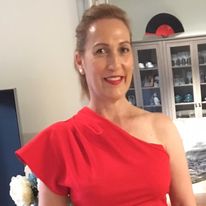
Tina Morganella, editor of 'Wear a Mask, Cupid!
Dr Maria Isabel Jimenez, editor of 'Wear a Mask, Cupid!'

About the Editors

Ms Tina Morganella

Tina is a freelance writer and copyeditor with an MPhil in creative writing from the University of Adelaide, Australia. Tina writes short fiction, personal essays and travel literature. Her short stories have been published in STORGY Magazine (UK), Tulpa Magazine (Australia), Sky Island Journal (US), Entropy (US) Sudo (Australia) and Fly on the Wall Press (UK), amongst others. Tina also has nonfiction work published in the Australian press (The Big Issue, The Australian, The Adelaide Advertiser). In her bi-weekly blog, Use it in a Sentence, Tina introduces readers to Merriam Webster’s Word of the Day via micro fiction. Tina is currently between boyfriends, and yes, she has tried online dating with varying degrees of failure.

Dr Maria Isabel Jimenez

Maria is an Officer in the Australian Defence Force. She has a PhD in complex Military Procurement Projects from the University of South Australia, and extensive experience in logistics and procurement, both in the government and private sector. Strangely, none of this prepared her for her online dating tour of duty. Maria survives to tell the tale, with only minor battle scars and a motivational speaking tour planned, once COVID is over. She is fluent in Spanish, is learning French, and knows how to cha-cha. Current personal status: It’s complicated!!

BAKER, Andrew

ISBN 978-1-922452-32-0 PAPERBACK

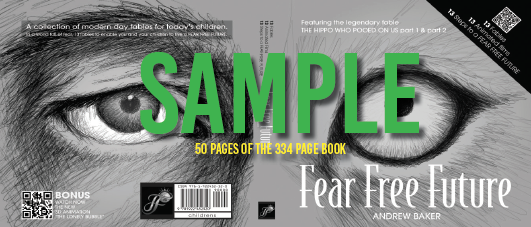
Fear Free Future

A collection of modern-day fables for today’s children.

In a world full of fear, 13 fables to enable you and your child to live a FEAR FREE FUTURE.

Featuring the legendary fable THE HIPPO WHO POOED ON US parts 1 and 2.

13 fables, 13 Animated films, 13 Steps to a FEAR FREE FUTURE.


  • 216mm x 216mm
  • 334 pages
  • Full colour throughout
  • QR code links to 13 online animations

MILES, Greg

ISBN 978-1-922452-67-2 PAPERBACK

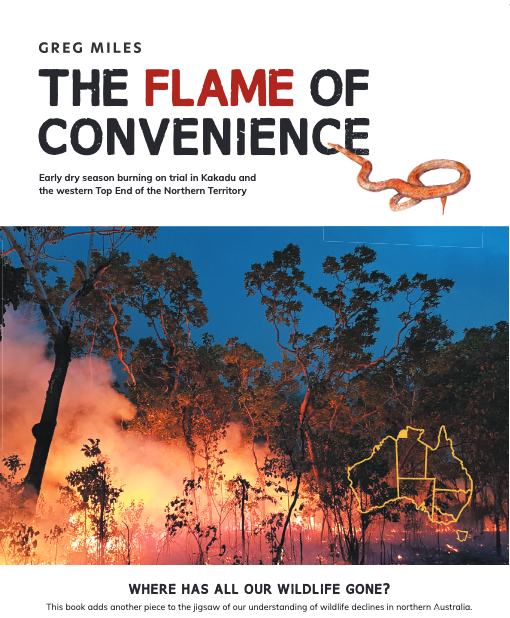
The Flame of Convenience 

Why is it that wildlife in the Top End began disappearing in the late 1990’s? Some of Australia’s best biologists have been trying to answer this question for decades. But no clear answer has yet appeared. Wildlife loss in Australia’s monsoonal tropics (including Kakadu National Park) is the result of a complex range of issues, most recently topped off by the toxic Cane Toad. This book approaches the tragedy of these declines from a different angle than most, and offers a solution (at least in part), which has so far received little attention. Greg Miles suggests that much of the natural landscape between the Arnhemland border and the western Top End is not as natural as we may think. He argues that the fire regime currently employed by natural area land managers and others, is largely off target if wildlife protection is the goal.

About the author 

In 1974 Greg Miles was appointed as a ranger in the top end of the Northern Territory, Australia.  This was an exciting challenge for someone who, right from a young boy growing up in mid north South Australia, had been keeping native animals as pets.  His professional wildlife career began when he became a bird and reptile keeper at Adelaide Zoo.  From there he moved on to be the keeper in charge of terrestrial reptiles at the Australian Reptile Park at Gosford before moving on to the reptile house at Melbourne Zoo.

As a Wildlife Ranger based in Darwin he managed wildlife licencing and pursued bird traffickers and barramundi poachers.  Also in 1974 he was tasked with finding 20 cane toads that had escaped from a schoolteacher in Darwin’s northern suburbs. 18 of the 20 toads were recovered.

In 1976, he was posted to a ranger’s position at Cannon Hill on the edge of the East Alligator River.  A caravan here became his new home where his wife and first baby joined him.  It was in these early days that Greg and Jane became friends with the senior Aboriginal people of Kakadu.  It was a rare, never to be repeated privilege to share time and country with people who still possessed an encyclopaedic knowledge of country and culture.  

Greg spent 26 years in Kakadu as Chief Ranger, park naturalist and photographer.  He later headed up various park projects including tour operator training. There was a two-year break when he was the Government Conservator on Christmas Island (Indian Ocean).

During his career, Greg’s primary focus was on habitat management for wildlife conservation.  The work involved controlling invasive weeds and feral animals.  This included weeks spent in a helicopter shooting buffalo, cattle, pigs and horses for the Brucellosis and Tuberculosis Eradication Campaign.  This perched seat enabled him to learn to read the health of country before and after fires.  But perhaps more importantly was time spent experimenting with different fire regimes and refining the methodology for burning in the wet season.

In 1988 he wrote the book “Wildlife of Kakadu” which sold more than 24,000 copies.

Sadly, despite the best efforts of people in Kakadu, he witnessed the unstoppable declines of numerous animal species that had been so numerous in those early days.  It was this depressing situation that spawned the genesis of this new book.

In 2004 he retired to his Darwin rural property where he breeds pig nosed turtles and is a conservation lobbyist.  He sees captive breeding and fenced enclosures as the best future strategy for saving threatened plant and animal species.

SLEE, Max

ISBN 978-1-922452-72-6
PAPERBACK


Canowie Station

In 2021 Old Canowie celebrates the 175th Anniversary of its foundation in 1846. This historic homestead, mid-way between Hallett and Jamestown in South Australia’s Mid North, is a remnant of the former Canowie station and Canowie Pastoral Company.
The Company was one of the earliest corporate pastoralists. Most such enterprises are owned by just one family, but the surnames of Canowie station owners and managers reads like a Who’s Who of the leading South Australian pastoralists of the provincial era.

Although the once-renowned Canowie estate has long since been subdivided into highly-productive grain farms, and its famed merino stud now operates elsewhere, for half a century the Company ran one of the most influential and prosperous sheep stud enterprises in Australia.

The genetic strength of the magnificent Canowie sheep evolved into a large framed combing wool merino, known generically as the ‘South Australian strain’. At the 1911 Royal Adelaide Show, Canowie stud rams scooped the prize pool in every category, which was a record.

By 1903 over 2,000 swagmen per year received their customary two meals and a bed at Canowie. By 1905 it was the largest private freehold landholder in South Australia.

With some shareholders having returned to England, land reformers complained that it was the third largest absentee landholder in the State, the largest being the South Australian Company. But, having sought and achieved immunity from the land reformers, the Canowie Pastoral Company was unexpectedly liquidated at the height of its prosperity.

A series of lucrative auctions of Canowie land commenced in 1909, culminating with the homestead and stud in 1925. That of 1910 was the largest single auction of freehold land ever held in South Australia to that time.

Exhaustive research now reveals the fascinating history of Canowie’s exciting frontier origins, its expansion into prosperous corporate pastoralism, and then voluntary liquidation at the peak of its success, leaving a remarkable legacy to the Australian wool industry.

GILLAN, Brian

ISBN 978-1-922337-75-7
PAPERBACK

Who Can Save the Dolphins?

Ten year old Sam loves to watch the river. But her world soon changes that there are lethal dangers lurking in the water–and they are killing the dolphins. Sam and her friends could not have foreseen the impact of their quest to save the dolphins, nor the danger they were in.

Brian Gillan’s book is a realistic story of the plight of a dolphin – capturing the attention of the reader, young and old, empowering people to be more careful about the disposal of rubbish.

Dr Michele Blewit – Project Director, AUSMAP

A vivid story about how one young dolphin fell victim to a plastic bag will go a long way toward ensuring young people do not repeat the careless littering mistakes of previous generations.

Dr Mike Bossley – Marine Biologist and Conservationist

About the Author

Brian Gillian is the original Captain Brine. He has written the book from his experience…. it is based on his true story.