MORRIS, Don

ISBN 978-1-923589-52-0
PAPERBACK

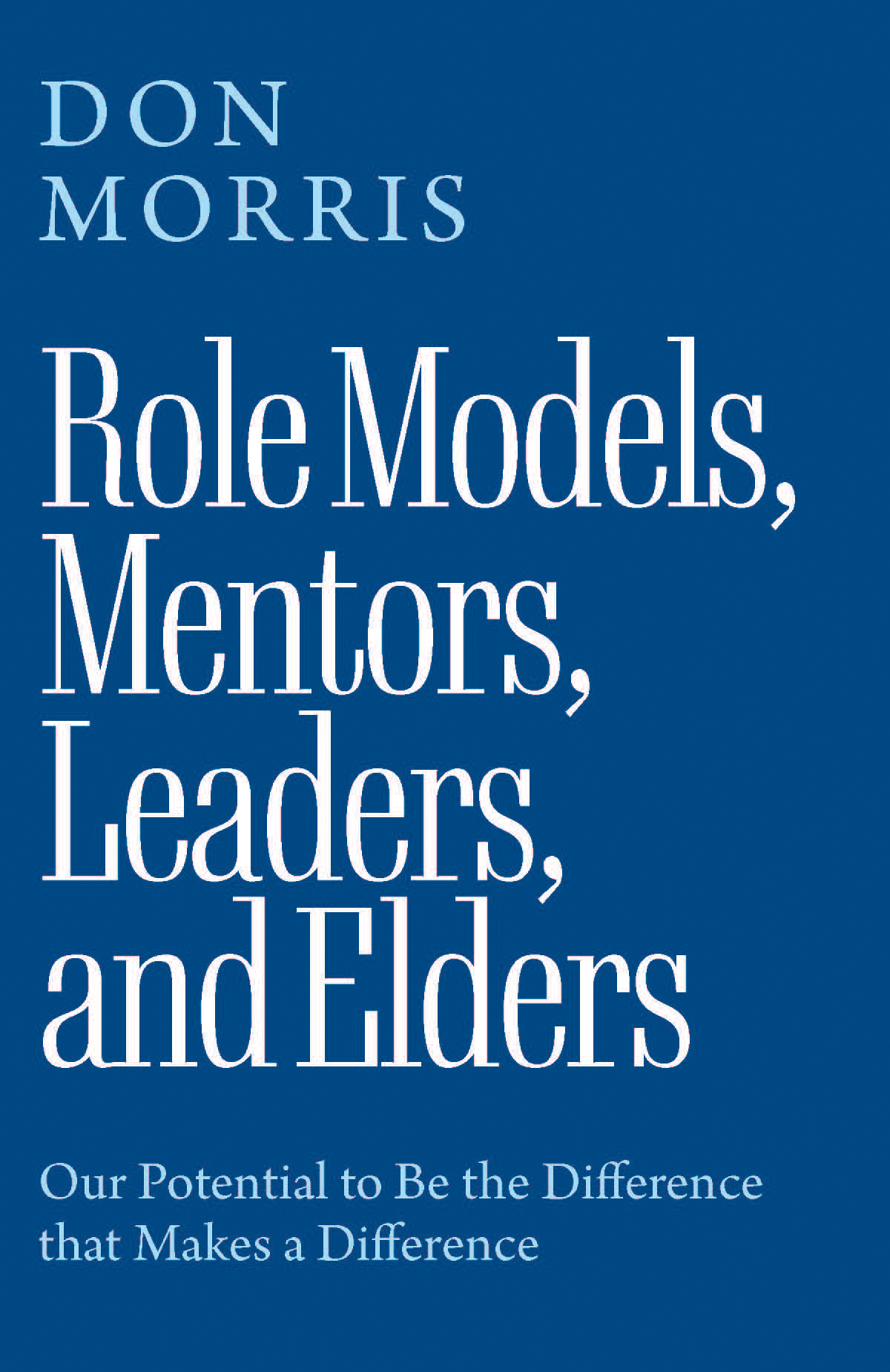
Role Models, Mentors. Leaders, and Elders


Our Potential to Be the Difference that Makes a Difference

To quote Hal David’s iconic 1965 song…

“What the world needs now is love, sweet love It’s the only thing that there’s just too little of What the world needs now is love, sweet love Not just for some but for everyone”.

This book suggests that Role Models, Mentors, Leaders and Elders can nurture and build love for one and all. Over time … more and more of ‘us’ … in these roles … can help build loving values in families, relationships, communities, and ecologies … locally and globally.

Through ever-increasing role-modelling, mentoring, leading and eldership, many persons and peoples of the Earth can nurture and proliferate love in the form of dignity, respect, kindness, fairness, generosity, integrity, and accountability.

You and I and ‘a host of us’ can nurture loving-valuesin- action to benefit all people, all our fellow species, and all of Nature. Millions of ‘us’ have the combined potential to fulfil these noble and necessary roles to help serve and heal our World and our Earth.

Over decades, a minority of exemplars can become many. Exemplars of love can become the new norm, the new normal way to be human. We can do this. We must do this.

This book is original and thought-provoking.

It is a quick and easy read.

ISBN 978-1-923443-85-3
PAPERBACK

ISBN 978-1-923523-43-2
EBOOK

Dickheads, Wankers, and Arseholes


A bold and cheeky guide to decoding three male types and syndromes

If you haven’t read a book about Dickheads, Wankers, Arseholes? Here it is.

If you haven’t read about the syndromes of dickheadery, wankery and arseholery? Now you can.

It’s about time someone wrote about these bleedingly obvious personality ‘types’ … and about three enmeshed, problematic, and far-reaching cultural syndromes.

This book is plain-speaking, perceptive, penetrating, cheeky, and original. It is widely relevant, practical, and replete with insightful analysis. It is written in a distinctly Aussie voice.

And … it is written by a ‘man’ … with decades of experience through a blend of Policing, Community Corrections, Social Work, teaching at university, Consultancy, and training Police at all levels in a range of subject areas.

For some readers … there may be some seismic shocks. Look out … men.

Get ready to nod and sigh and refl ect on the painfully obvious that you may have intuited and-or observed … but had not crystalized into detailed understanding.

Grab this book … and get reading!
ISBN 978-1-922957-98-6
PAPERBACK

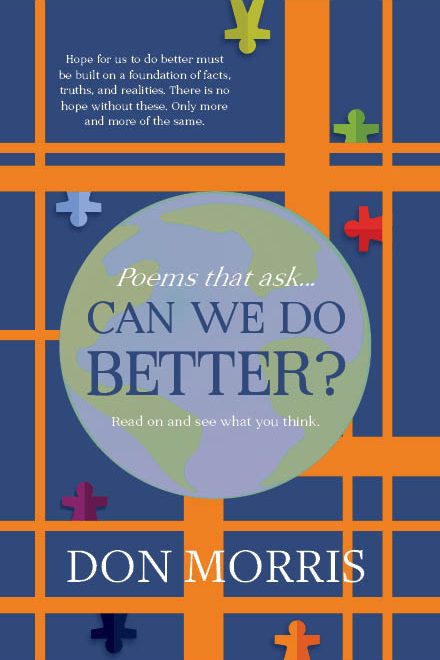
Can We Do Better?

All Don’s books are about hope for us humans to do better than a mishmash of historical and current issues and harms that arise from misguided, dysfunctional and destructive expressions of masculinity. As clarified in all the poems — misguided, dysfunctional, harmful masculinity is not by all men, or even by most men, but is too-often manifested here, there and everywhere by too many men, in too many realms, over too long a time.

The poems weave a detailed network of patriarchal issues in culture, religion, politics, institutions, communities, families, and relationships. They highlight the impact of manmade harms to the earth, First Peoples, women, children, and other often-disempowered societal groupings.

Some men might struggle with this unusual and confronting anthology. In contrast, it is likely that a good proportion of women will sigh and nod as they work their way through the poems and the themes.

The poems advocate that societal evolution is contingent upon a critical mass of us facing key facts, truths and realities about wayward masculinity. The anthology concludes with a range of powerful and hopeful invitations that may help us humans do better than our history of man-made harms to ourselves, our kindred species, and the earth … our Mother.
ISBN 978-1-923156-08-1​
PAPERBACK

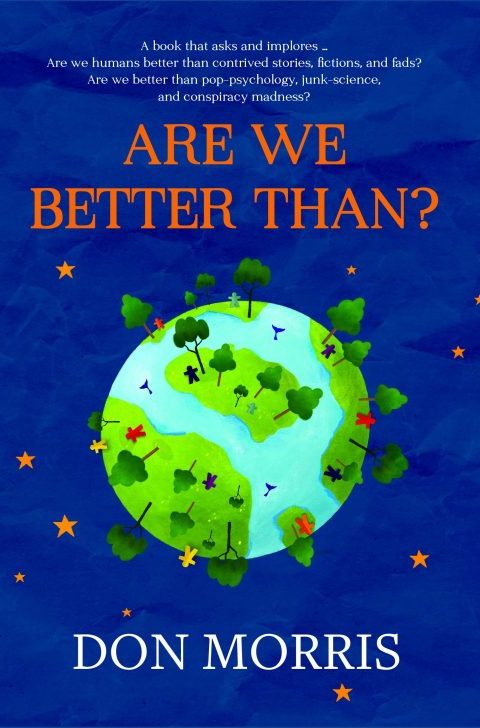
Are We Better Than?

ARE WE BETTER THAN? is the fourth in series of books that tackle pervasive and perplexing human issues. It is the scaled-down, abridged little-sister version of Can We Do Better? … which is the first and by the far the largest of the series. Comprising about half the number of pages of Can We do Better? … Are We Better Than? is less daunting and more manageable. This will appeal to people who prefer a smaller, easier, more compact read.

All Don’s books are about hope for us humans to do better than a mishmash of historical and current issues and harms that arise from misguided, dysfunctional and destructive expressions of masculinity.  As clarified throughout the book, misguided, dysfunctional, harmful masculinity is not by all men, or even by most men, but is too-often manifested here, there and everywhere … by too many men, in too many realms, over too long a time.

Are We Better Than? weaves a detailed network of patriarchal issues in culture, religion, politics, institutions, communities, families, and relationships. It highlights the impact of man-made harms to the Earth, First Peoples, Women, Children, and other often-disempowered societal groupings. Some men might struggle with these unusual and confronting themes. In contrast, it is likely that a good proportion of women will sigh and nod as they read.

Are We Better Than? concludes with a range of powerful and hopeful invitations that may help us humans do better than our history of man-made harms to ourselves, our kindred species, and the earth … our Mother.

About the Author

Don Morris is a family man and a retired veteran social worker. His professional background integrates counselling, program management, organisational improvement, cultural change, leadership development, teaching at university, and running his consultancy business.

Don is people-focused, a big-picture thinker, and a change agent. He is dedicated to promoting social justice and critical analysis of human issues. Don is perceptive, an original thinker, and solution-focused. He tackles issues with clarity, focus and determination.

In this anthology, Don is a ‘conscious dreamer’ and a mindful visionary. He is lucid about respective and combined influences of religion, populism, political machinations, pop-psychology, junk-science, conspiracy madness, internet misinformation, and social media inanity. In the face of these, Don is committed to educational processes that give voice to facts, truths and realities. He is also committed to possibilities for us to do better than so much unhelpful stuff that dumbs us down and holds us back.

In all his books, Don drills down into ‘inconvenient truths’ and synthesizes diverse macro and micro issues. He proposes ways for us to build a conscious blend of awareness, dignifying values, rationality, integrity, and accountability. Don reminds us that these interrelated priorities apply to individuals, relationships, institutions, communities, cultures, and governance. They are also crucial to our care and custodianship of human and environmental ecologies.

Don is person of mind, heart and hand. He is thinker, a lover, and a doer. His books encourage readers to think intelligently, rationally and strategically … to feel sentiently, passionately and earnestly … and to act purposefully, constructively and hopefully.
TOMLINSON, Angela

ISBN 978-1-922629-08-1
PAPERBACK

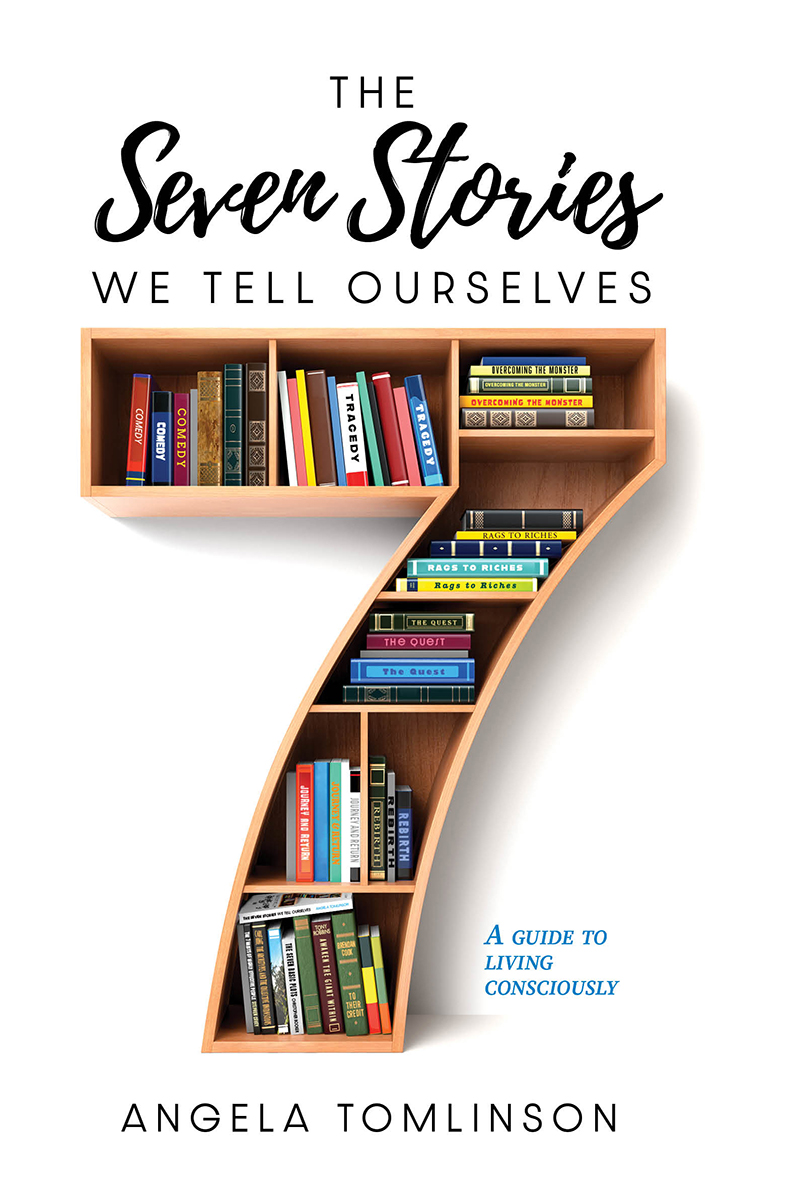
The Seven Stories we tell Ourselves

Through all the events of our lives, we take the “facts” and arrange them into narratives that we tell ourselves.

Did you know we only have 7 basic stories from which to create these narratives?

And you can choose your narrative. But there are consequences
to the narrative that we tell ourselves. Each narrative has a pathway to resolution, a direction we must take. Each narrative can either serve us or hinder us in finding contentment and control in our lives. We can choose our narrative actively and therefore have control over our lives or we can allow ourselves
to choose subconsciously and accept the consequences of this.

The Seven Stories We Tell Ourselves provides a framework for understanding how we are telling our stories to ourselves.
It shows us the alternatives available for us to change our narratives and how we must proceed within our lives toward resolution of our daily conflicts and struggles. It is filled with inspiring stories and examples as well as tools to help us become the captain of our own ship, to be in charge of our own lives and to LIVE CONSCIOUSLY.

About the Author

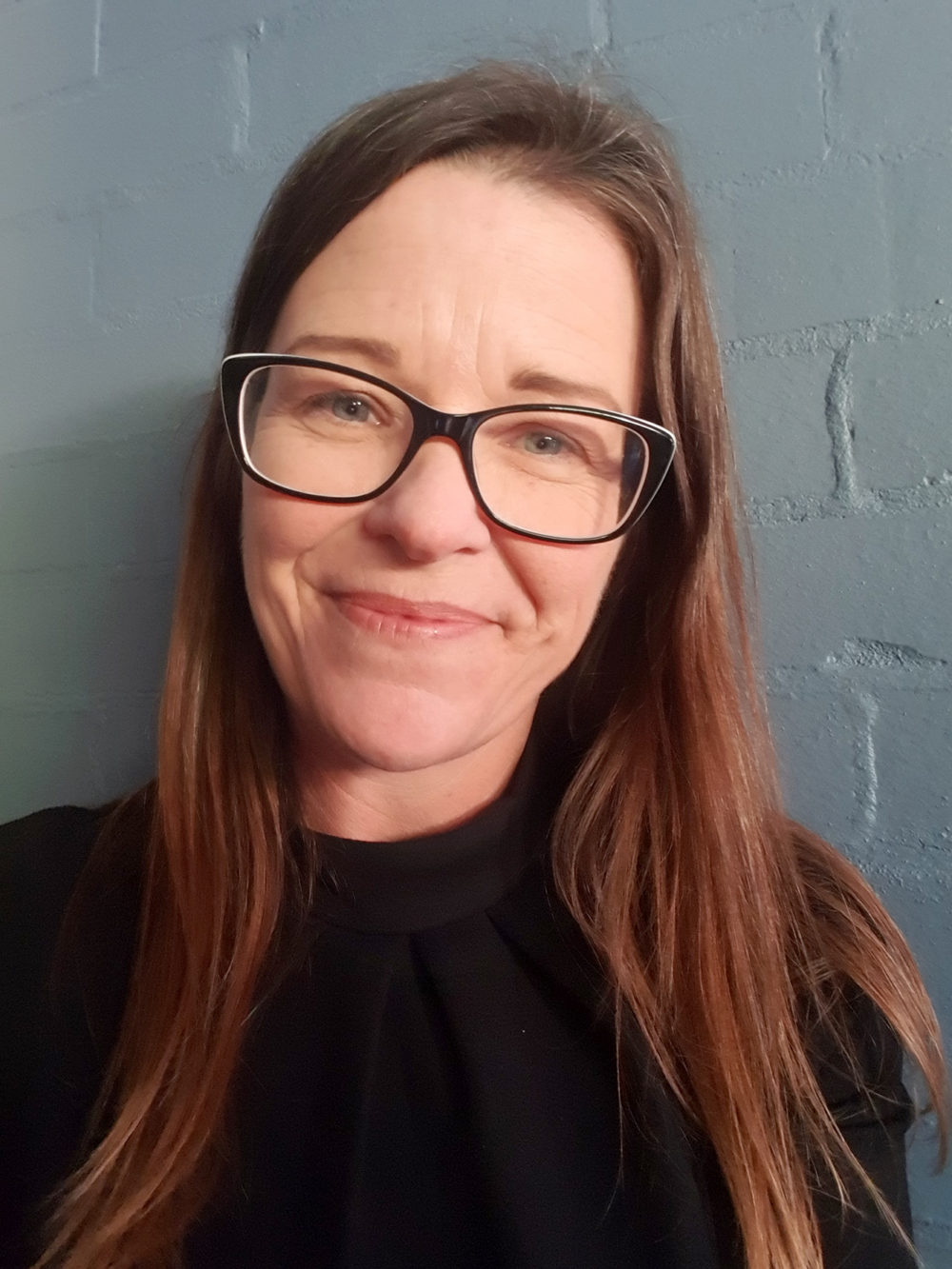
Angela Tomlinson lives to add value to every endeavour she pursues and to the lives of each person she meets, which is lived out in her work as a personal development coach. Holding a BA in Comparative Literature and a DipEd, Angela has been an educator for over twenty years. She is an experienced public speaker and is the co-founder of Podium Public Speaking.

The Seven Stories We Tell Ourselves is Angela’s first book, but she warns there will be many.

Angela can be found at www.angelatomlinson.net and is available for coaching, workshops and public speaking events.

SMITH, Richard & HOUGHTON, Henry

ISBN 978-1-922527-64-6 PAPERBACK

Eyes In The Sky 

This book is a must read for anyone concerned with climate change and lack of Government action addressing this rapidly unfolding crisis.

The authors, tell their story of introducing the new technology of observing Earth from Space into the WA Government, following the first images of Earth being sent back by man from space some 50 years ago.

Earth Observing Satellites (EOS) soon followed giving a new and unique view of the Earth revealing the massive human impacts driving climate change, species extinction and human conflicts. For the first time in history key WA Government agencies had unparalleled access to the means of measuring and sustainably managing WA’s natural assets across the whole continent and surrounding oceans. Many new and innovative applications of EOS were developed.

However these applications encountered the fundamental conflict between Ecology and Economics, which caused a drastic cutback when WA’s Land Information Authority found that in pursuit of its commercial goals, sustainability was unsustainable. A fatal paradox that the authors argue, urgently needs to be addressed if climate catastrophe for future generations is to be avoided.

Richard Smith and Henry Houghton authors

About the Authors

Richard Smith BSc (Agric) Hons (Lond), Dip Agric Econ (Oxon) PhD (UWA), migrated in 1965 to Western Australia aged 23, as a farm management consultant to 35 farmers, managing over a million acres. Then an Australian Wool Board Scholar, CSIRO Post-doctoral fellow, University Lecturer, CSIRO Research Scientist and NASA Research Associate. He has worked in the USA, Netherlands, Saudi Arabia, Syria, Vietnam, Malaysia and Indonesia.  He was recruited by his co-author, Henry Houghton in 1990 to lead the WA State Government’s Satellite Remote Sensing Centre. He has 66 peer reviewed scientific publications and given 52 conference presentations. He helped found a not-for-profit charity for indigenous peoples in the NW Kimberley and W Papua, Indonesia and wrote business plans for over $7 million of community development. He is a volunteer guide on Rottnest Island and a Lay Preacher in the Uniting Church, with an interest in Eco-theology.

Henry Houghton BSc (Surveying), Licensed Surveyor (1968), migrated from England to Western Australia in 1957. As a licensed surveyor of the Department of Lands and Surveys, he undertook land, soil, engineering, farm subdivision and mapping surveys across the State. In the mid 1970s he was coordinator of the State’s satellite remote sensing, establishing the WA remote sensing centre in 1982 leading in 1991 to the purpose-built Leeuwin Centre for Earth Sensing Technologies. Then as Director of Survey and Mapping and Surveyor General in the then Department of Land Administration he guided the development of the land information data sets essential for land management. Following retirement in 2001, he worked as land consultant in Victoria and Tasmania before working on land projects in the Philippines. He is a Fellow of the Institution of Surveyors Australia and was awarded an Australian Centenary Medal in 2001 for services to the community.

SMITH, Michael

ISBN 978-1-922452-64-1 PAPERBACK

Sace Physics 

The SACE Physics Course Companion provides students with a physics text that is thorough, easy to understand, and comprehensive – a text essential for success in SACE Stage 2 Physics.

The SACE Physics Course Companion contains:

• Detailed explanations of the physics content required for SACE Stage 2 Physics;

• Comprehensive explanations of physics applications and contexts;

• Clear derivations of physics formulae;

• Hundreds of diagrams to clarify physics concepts and processes;

• Over 170 questions with answers.

The SACE Physics Course Companion is the ideal text for students undertaking the SACE Stage 2 Physics course.

EATTS, Steve

ISBN 978-1-922452-52-8
PAPERBACK

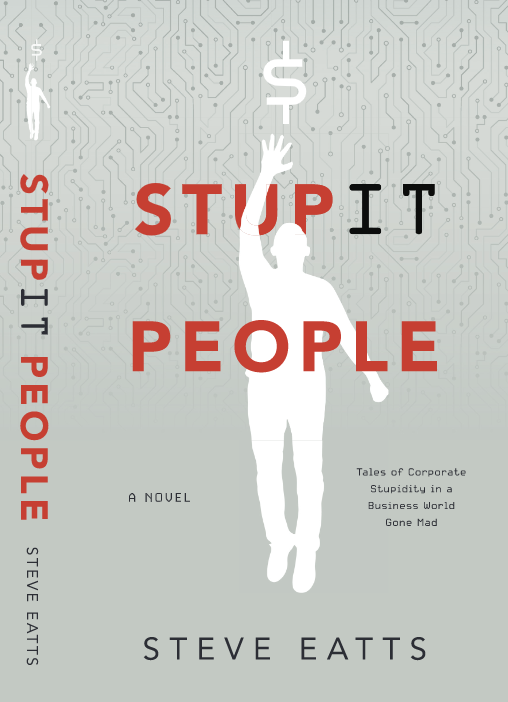
StupIT People

StupIT People is a tongue in cheek exposé of the world of modern big technology business. It’s a world where corporate madness and self-interest rules. One in which clients and employees simply don’t matter, as senior executives (aka company psychopaths) pursue short-term personal profit and internal point-scoring at absolutely any cost.

The story revolves around Michael Mansfield, a loyal and hard-working IT Sales Executive who strives to do the right thing by his company. For Michael, saving stupid people from themselves, navigating the constant back-stabbing within the business, and dealing with corporate political correctness gone mad has become a way of life.

This light-hearted tale of redemption will resonate with anyone who has experienced the sheer head-scratching absurdity that often exists within the modern business bubble.

About the Author

Born and raised in Adelaide, Steve Eatts worked in the field of Information Technology for more than 30 years, in many different roles across both public and private sector organisations. Throughout his career his work has taken him on business assignments in the United Kingdom, USA, India, Japan, New Zealand, the Philippines and across all states of Australia.

After a hectic career involving far too much time away from family and friends, Steve decided to step off the corporate treadmill of IT and big business to pursue some other interests including writing his debut novel.  He now describes himself as semi-retired, and is a widower who lives in South Australia with his two sons.

HODEL, Barbara

ISBN 978-1-922337-56-6 PAPERBACK

978-1-922452-05-4 EBOOK

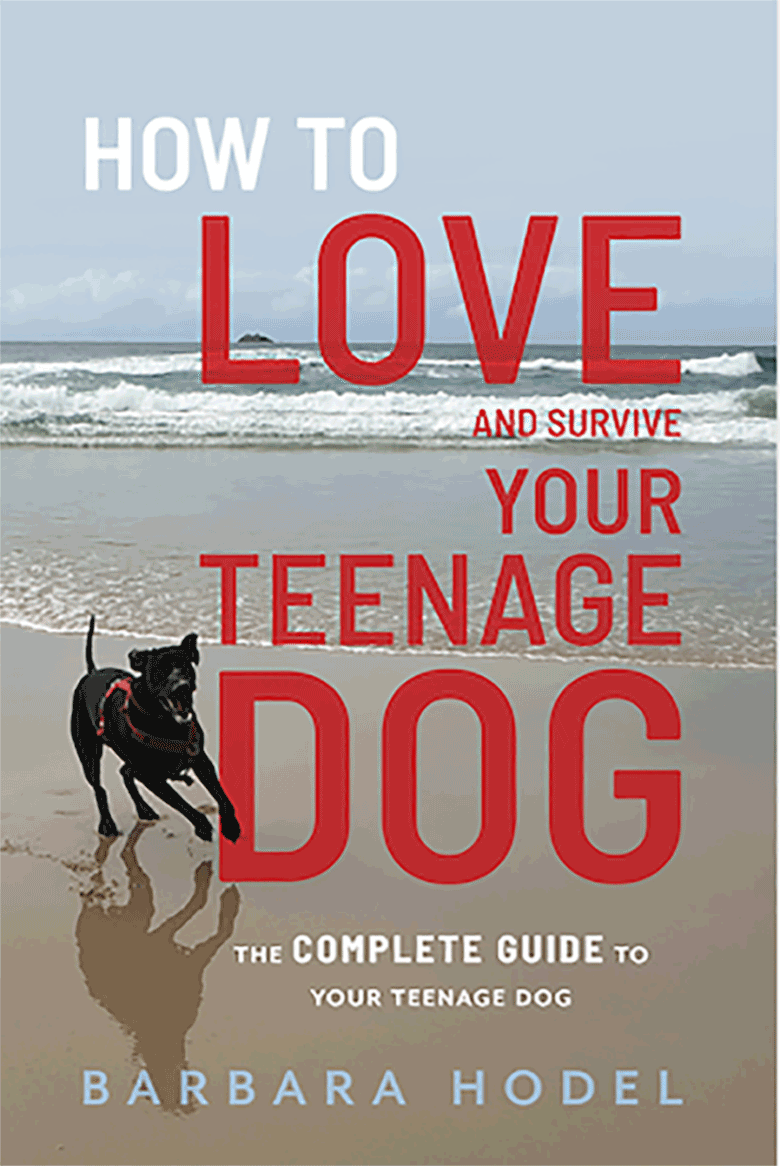
How To Love and Survive Your Teenage Dog

All dogs (and humans) have to go through the teenage phase to reach the stability of adulthood. Some dogs breeze through this stage with barely a glitch, but most of us will have a challenging time.
It is normal to sometimes feel despondent or disappointed because we thought we did everything right when they were puppies and now nothing seems to be working. The challenges of the teenage phase are real and can put our relationship with our dog at risk.

It does not have to be like this! This book will help you to understand your teenage dog better and navigate these challenges, by covering: an understanding of the unique challenges you and your teenage dog face; why and how your relationship matters in the training process; the role of anthropomorphism and consideration of dog emotions and minds; the benefits of positive reinforcement; the importance of lifelong socialisation; how to keep your and your dog’s sanity despite some common setbacks; and promoting the value of calmness.

You can – and should – enjoy your teenage dog despite the difficult behaviours they show. The reward is
a happy and well-adjusted friend for life!