BAKER, Joanne

ISBN 9781922337-47-4
PAPERBACK

Time Gentlemen, Please

Growing up in the Northwest of Western Australia in the 1900s was a tough life. It was a place where one was wise to pay respect to the harsh, uncompromising climate in this rough area of the coastal towns of Port Hedland and Carnarvon. A picture is painted about life in these towns during this time. My story tells about my father’s life in both of these places. He grew up with his mother and two older sisters, carving out a life without his father. He achieved his dream of becoming a publican. He met my mother in Port Hedland when she went north to work at the Pier Hotel. My story takes you on a family’s journey as they faced resilience and triumph over many challenges growing up in the North of Western Australia.

Joanne Baker self-published author of 'Time Gentlemen, Please: The Cry of the North-West Publican'

About the Author

In 2016 after suffering a huge operation to remove a sarcoma cancer from my pelvic region I lay in bed in hospital for some 128 days! I spent so much time lying in the hospital bed thinking about my life, from here on.  Changes had to be made in order to walk and maintain balance after losing the use of my right leg and as a result of the surgery to the pelvic area. I now rely on the use of a walker. My cancer has returned to my lungs three times and my pelvic region once since 2016 and I am monitored every four months.

My thoughts went to the things I wanted to achieve before I left this earth. Being so sick and not knowing what the outcome would be, I began to make my list. Number one was to write a book. A school friend had written several books on her family, so I had met with her with the plan of my book and together we made some refinements. My book would tell the story about my father’s life as I always thought how much he had achieved from humble beginnings.

 I was one of seven children born to my mother, Myrtle and father, Gordon Meiklejohn. I was born in 1953 as Joanne Patsy Meiklejohn, here in Perth, Western Australia. I had three sisters older born in 1941, 1943 and 1946. I also had two sisters younger than me. My only brother Kenneth had died in his birth year, 1952 of a hole in the heart, so I grew up in this family of six girls. In the early years in Port Hedland the three older girls looked after me when they were home on school holidays as my parents were busy running the hotel. They also looked after my two younger sisters whilst we lived in Carnarvon.

My father Gordon was thirty seven when I was born.  This meant doing lots of research within my family and using other sources to cover the period Dad had lived before I was born. Most of his family had died and he’d always insisted there were no other Meiklejohn’s around. As I did some family research I found this to be untrue but maybe he never knew!!!  His mother Mary Emma Meiklejohn, born in England had written a story of her life for her three children and told them about their father and their early together. My Grandfather came from N.S.W. He worked in Port Hedland prior to marrying. Unfortunately, he drowned in 1919, when my father was only two and a half years old and his sisters still quite young. My Mother had also written about her early life and her life with Dad and as it happened, my eldest sister who had died had also written her story of growing up with Mum and Dad. So with these records as my starters I began to research Gordon and Myrtle’s Meiklejohn’s life. I grew up with my father as a publican in the time where the hotel’s excluded the Indigenous and in some situations women. Whilst I grew up with power, television was not part of our lives at that point. The impressions of my early life were long lasting and I always wondered about how hard life was for most people. I moved from Port Hedland to begin school in Carnarvon. As the hotel was out in East Carnarvon I had catch a bus to school until we moved into the Gascoyne Hotel in Carnarvon Township. I experienced floods, cyclones and many long hot days but life was good and I wouldn’t have changed anything. After completing my Junior Certificate, I attended boarding school in Perth at St Mary’s Anglican Girls School for two years until I finished my leaving exams. From here I trained as a teacher, married young and had a baby girl. I experienced many different locations as I moved around the state teaching. I spent many years teaching in the Kimberley and at a Remote Aboriginal School and I held positions where I assisted younger teachers in their classrooms improving their educational delivery. My daughter moved to boarding school to complete her education as her father and I continued to teach in the North of Western Australia. My daughter followed myself and her father into the profession. I then moved to Perth and continued my career working for thirty years as a teacher. I never forgot the places I had lived in as all these places gave me such wonderful experiences. Life for me now is full of scrapbooking my photo’s, completing family research, doing some quilting, enjoying my grandchildren, reading about other people’s life experiences and going off in our caravan with my husband to further  explore our wonderful country of Australia. Oh yes I have worked on my list and keep adding to it because life goes on, yeah!!!!

JONES, Bethney

ISBN 978-1-922337-84-9
PAPERBACK

A Stone’s Throw

Filth, and sickness proliferate in Stepney, England, in the 1830’s, where Robert Stone and his family lived.

For the husband and father, the ability to make a living and feed his family was shrinking rapidly. Then, by chance came hope, emigration to Van Diemen’s Land. It would take every ounce of bold courage, grit and determination to make the journey. Were they, Robert, Elizabeth and their off spring resourceful enough to defy the elements and challenge the unexpected in a gamble to forge a new life in a distant, desolate land? Elizabeth, embroiled in circumstances of an unforeseen, tragic loss had reservations. Finally, in desperation, the wrenched family left everyone near and dear, to join forty-six other emigrants on a long perilous journey.

VENZIDIS, Tom

ISBN 978-0-9876317-9-4
PAPERBACK

Master Class in Advanced Driving Skills


The Ultimate Driving Companion For Learners and Enthusiasts

The pages of this book paint a picture of our driving future. Written in the interest of public safety, Master Class in Advanced Driving Skills is a foundation for the most qualified and safest drivers.

Most of what is known about advanced driving skills today, began decades ago. The untold story of the great contribution that 1920s Grand Prix racing and two of its heroic drivers made to road safety are introduced here. Their contribution underpins most of this book.

The information in this manual is instruction in driving at a high standard. On learning and mastering these advanced skills, you will be assured of fully conscious, sentient driving in whatever type of motor vehicle you drive. Easy
to understand, it is a precious opportunity for learners and licensees who want to be better, safer drivers.

GWYTHER-JONES, Roy

ISBN 978-0-6481662-5-2
PAPERBACK

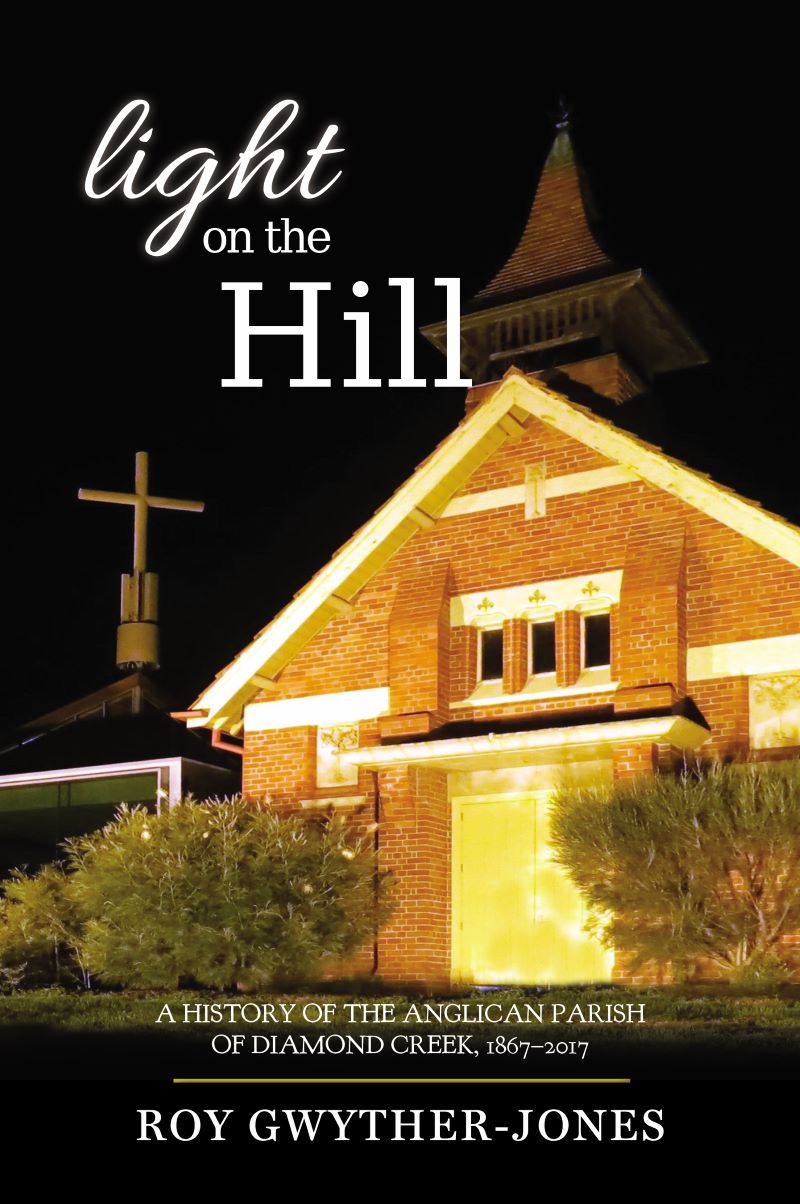
Light on the Hill

I give thanks for this book, Roy Gwyther-Jones’ labour of love, and commend it for your reading enjoyment and spiritual encouragement.

Philip Freier, Archbishop of Melbourne, Primate Anglican Church of Australia

This is not a history of buildings but of people. It is a model of presenting the gospel through the stories of the people, widening our vision, not just beyond the parish to the city, but also to the world.

Alan Nichols, AM, Archdeacon
Emeritus, Diocese of Melbourne

The deep value of this book is that the author has thoroughly researched and recorded the unique history of St John’s Parish, which could have been lost forever.

Rev. Jock Ryan, author and historian

Roy Gwyther-Jones has researched without bias the history of the church on the hill, St John’s, and recorded the facts meticulously.

David Cummings, Former International Director, Wycliff e Bible Translators

STUART, Patricia

ISBN 978-0-9946431-6-2
PAPERBACK

Black and White: Between the Lines

My story is about my heart being torn between two worlds, even at a young age, I remember the struggle was there within me, those strange feelings inside of me, not knowing what the feelings were? Who am I?

About the Author

Growing up in the early days, being poor, it was a time when you went without many things, but having a family to share everything with, we all thought having each other was all we needed. 

I was brought up as a Catholic. I remember going to church every morning with a lovely lady Mrs. Davis, rain, hail or shine and this was how I found my Christianity. This changed my life; the Lord became a very important part in my life and is still in my heart today.

I realised as I got older I knew I had to do something with my life; otherwise I would never amount to anything. 

During my working life, I have always treated everything I did as a challenge. I always set myself goals, I can now look back at my career, which was over a period of 30 years and know that I have achieved what I had set out to achieve. 

I knew there was something missing in my life; this was when I decided to start researching for.

AMERY, Richard

BOOK REVIEW

ISBN 978-0-6485614-0-8
PAPERBACK

The Five and Ten Men

TEN MEN WHO REDEFINED DISTANCE RUNNING

The story of ten men who helped define modern distance running.

The modern era of distance running, which began in the early part of last century, has been characterised by ever faster times and new records as the limits of endurance have been continually re-defined. The world records of today would have been largely unimaginable to previous generations of runners.

The classic events on the track for distance runners are the 5,000 and 10,000 metres, and over the period covered in this book, the world records have been reduced by over two minutes for 5,000 metres, and five minutes for the 10,000 metres. The records for both distances have been broken many times by many runners from a wide variety of countries.

However, despite the similarities in the physical requirements for each of the distances, only ten men have succeeded in breaking the world record for both events, making for an extremely select group. The group comprises runners from Finland, Czechoslovakia, Hungary, Russia, Australia, Kenya and Ethiopia.

Each came to the sport in a different way, reflecting both the era in which they competed and the country in which they were born. This book looks at these individuals, their sporting careers, the way they trained, their personalities, and the times in which they competed. It is the story of ten men who changed what was thought possible in the field of human endurance.


About the Author

I have always been interested in distance running. Not quite sure why. It is certainly not because of any great ability on my part. On the distance running continuum I would place myself as average – not completely hopeless, but a long, long way from world class. My only ever decent run was somewhat tainted – being disqualified (later re-instated) after winning the state marathon title many years ago. The crime? Wearing the wrong coloured shorts. Let’s just say that my interest and enthusiasm for the sport far outweighed my ability.

It is this interest, and the wish to impart something of the history of the sport that brought me to the point of writing this book. The subjects chose themselves. Of the many record holders over the classic distances of five and ten thousand metres, there have only ever been ten who have held both records. Were it to be a book on the ten greatest distance runners the list would probably not be much different. Each in their own way played a significant part in showing just what was possible, and in so doing raised the bar for those to follow.

I often say that the hardest world record to break or gold medal to win is the 100metres, simply because probably just about everybody at some stage runs a 100m race. If you have some ability it is going to become apparent pretty early. Training will build upon whatever natural ability is present. The distance events are probably not far behind. Requiring little in the way of equipment or facilities, just about anybody can find out fairly easily if they have an aptitude for the sport. That of course is the easy part. The hard part is maximizing what ability they might have.