LEE, Warwick

ISBN 978-1-923523-62-3
PAPERBACK

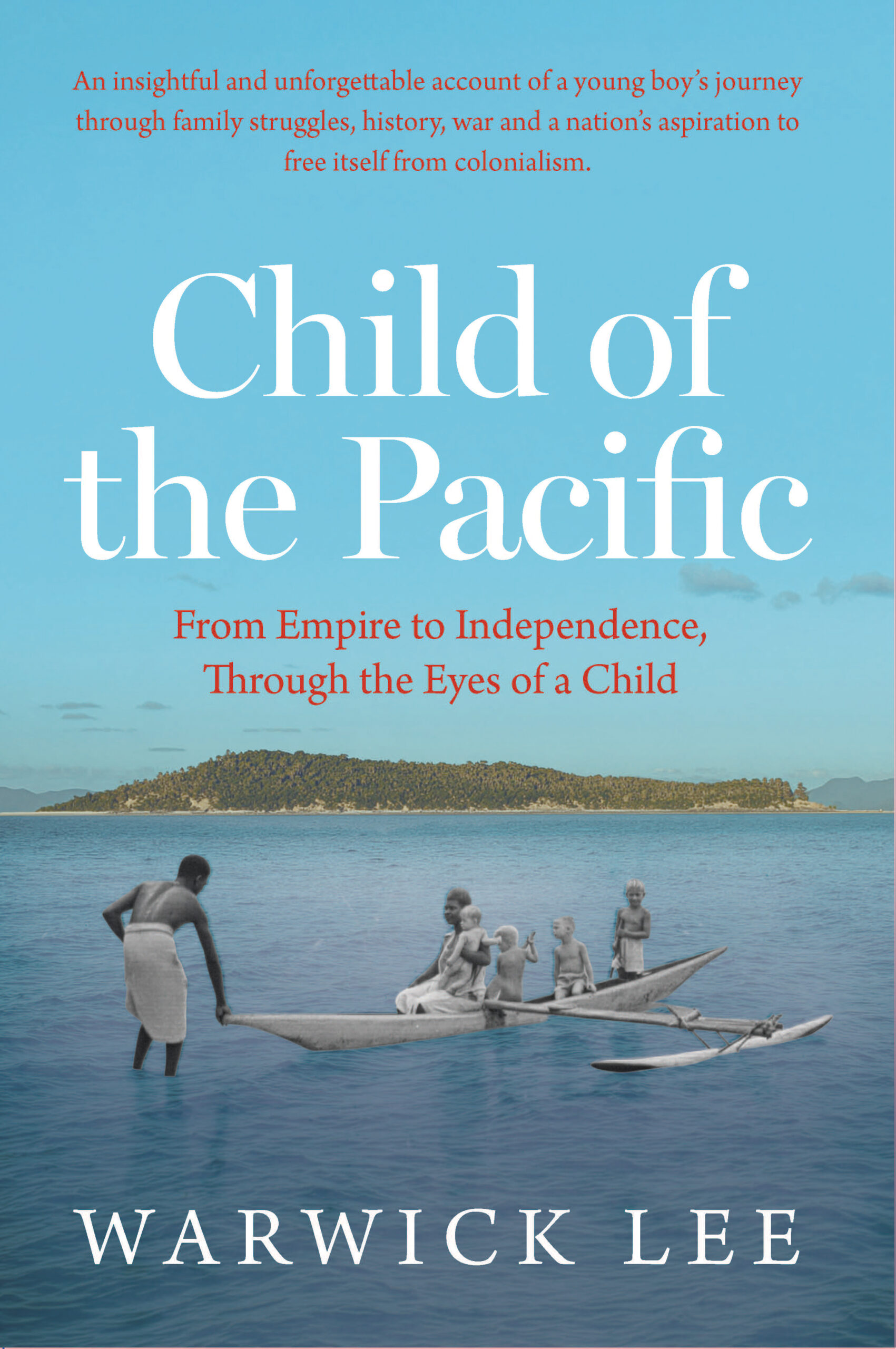
Child of the Pacific


From the Empire to Independence, Through the Eyes of a Child

An insightful and unforgettable account of a young boy’s journey through family struggles, history, war and a nation’s aspiration to free itself from colonialism.

Bougainville, Papua New Guinea, was a contested island for nearly a century. Germany, UK, Japan and Australia each had interrupted periods of administration, influence and development of the island and region around it.

In 1975, Warwick witnessed the country’s shift into independence.

As a young boy, he watched the place he’d grown up in change for the better. For the first time, its people felt they could once again be at the forefront in determining their own destiny, and the excitement and optimism at such a prospect was almost tangible.

This one of a kind memoir is told through the memories and records of a boy who lived through one of the most major changes in PNG history, following him from his formative years to the country’s 50 year anniversary of independence.

About the Author


WARWICK LEE was born in Bougainville in 1955 and became an Australian citizen in 1965.

In 1966 Warwick was sent to Melbourne to continue his education. He completed degrees in Economics and Law from Monash University.

Instead of a legal career, he chose a corporate career path and relocated to Sydney, working for several companies including Exxon (Esso), Mitsubishi and National Australia Bank.

He is married with three children, four grandchildren and now lives in Brisbane.

Warwick maintains a keen interest in geopolitical matters and particularly relation to Pacific countries. Whilst he relocated from Bougainville many years ago, his interest in what was his birthplace has never left him.

LAMPARD, Kerry

ISBN 978-1-923386-94-5
PAPERBACK

Tip Of The Spear


A Memoir

Currently residing in Adelaide with his wife, Kerry has been interested in all things military since his teenage years. At 17, he joined the Citizen Military Force and after a short time enlisted in the Australian Regular Army 1963, undergoing a 12-month Tour of Vietnam in 1965. Kerry applied to join the Special Air Service and, after completing the tough Cadre Course and other specialist courses, he was accepted into 2SAS Squadron. In early 1968, the Squadron was deployed to Vietnam on Kerry’s second 12-month tour.

The SAS led very successful covert operations. Some satisfying, others terrifying. These patrols ranged from a duration of minutes to seven days depending on the enemy activity. The Viet Cong called them Ma Rung, “Phantoms of the Jungle”, and put a price on their heads: $5,000—dead or alive.

Tip of the Spear is split into two parts. The first is a memoir of Kerry’s experience with patrols in the SAS as a forward scout. The second is three light-hearted fictional short stories.

EDGE, Steve

ISBN 978-1-923680-83-8
PAPERBACK

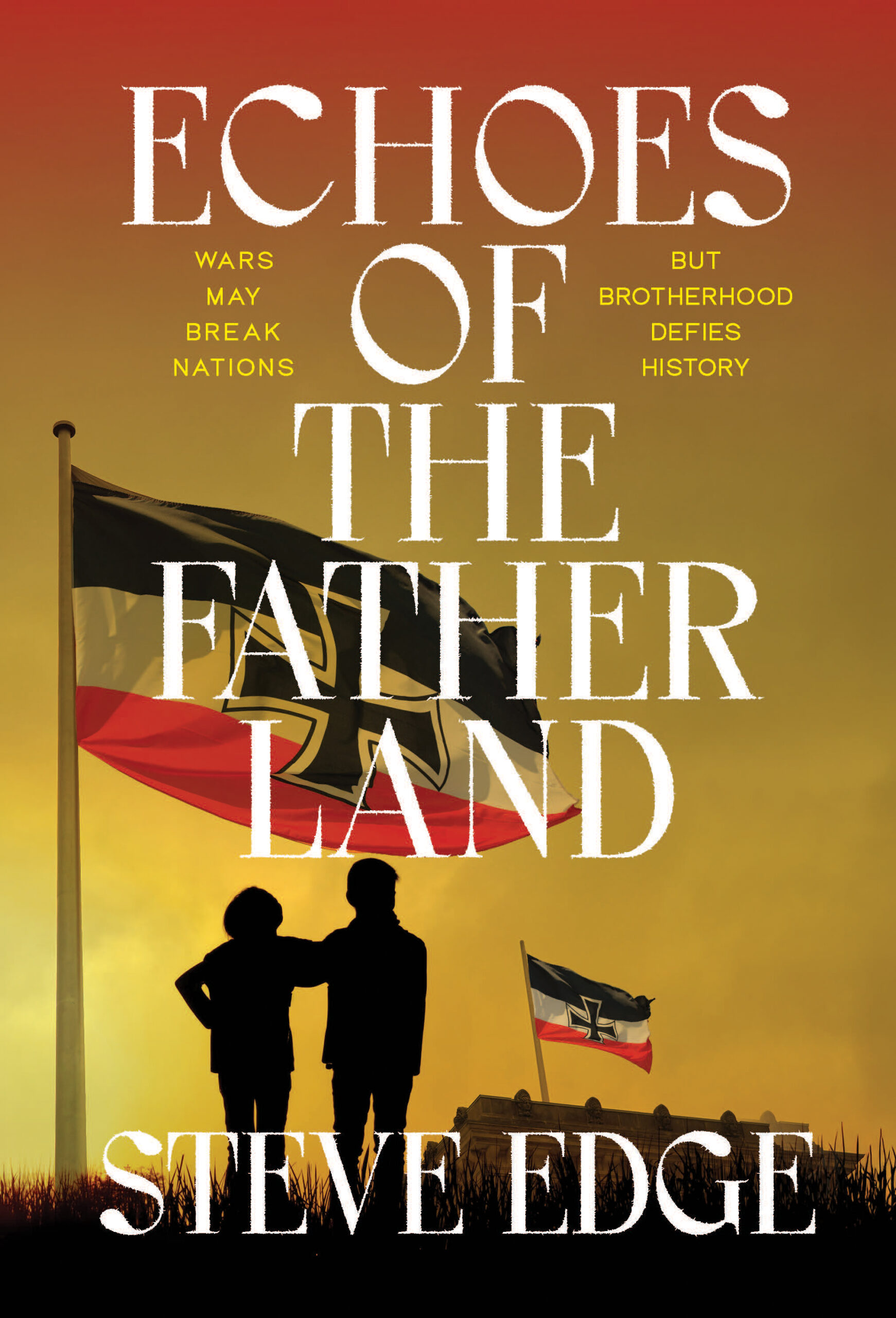
Echoes of the Fatherland


Wars may break nations but brotherhood defies history


The High Cost of Duty. The Human Price of War.

From the battlefields of the Great War to the ruins of the Second, Echoes of the Fatherland traces the lives of three men bound by blood, loyalty, and the weight of a nation’s fate. The First World War— hailed as the war to end all wars—left Germany scarred and humiliated, sowing the seeds for a new and even greater inferno. Out of that smouldering defeat rises a generation desperate for purpose, only to be swept once more into the flames.

Through the eyes of Hans, Wilhelm, and Friedrich, the story unfolds across decades of upheaval: from the disillusioned veterans of 1918 to the fervent patriots of the 1930s, from the deserts of North Africa to the frozen rivers of the Eastern Front.

As Germany’s destiny spirals toward destruction, these men are forced to confront the moral and human cost of their service—and the haunting question of what it truly means to love one’s fatherland.

SCRIMGEOUR, Gavin

ISBN 978-1-922527-50-9
PAPERBACK

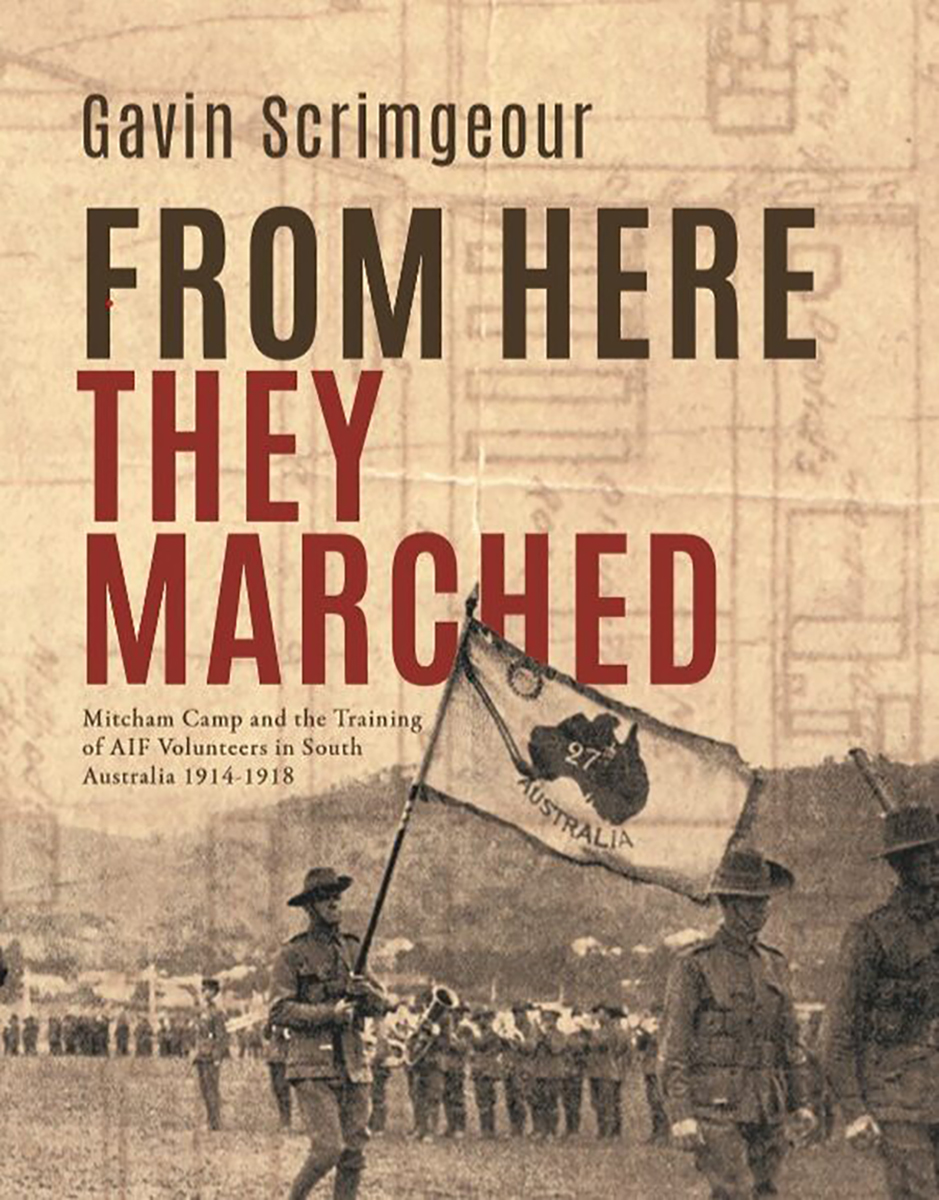
From Here They Marched

THE MITCHAM AIF CAMP, LOCATED IN WHAT IS NOW THE ADELAIDE SUBURB OF COLONEL LIGHT GARDENS, WAS THE TRAINING GROUND FOR THOUSANDS OF SOUTH AUSTRALIAN VOLUNTEERS WHO ENLISTED TO FIGHT FOR THE AIF IN THE FIRST WORLD WAR.

The camp, opened in bare paddocks in early 1915 after earlier camps had proved inadequate, overcame significant early difficulties to become what was proudly claimed to be ‘the model camp for the Commonwealth’.

From Here They Marched tells the story of the camp and how men from all walks of civilian life were brought together and prepared for the discipline of military life and for war.

It shows how the military authorities approached the task of also meeting the physical and social needs of as many as 4400 men at a time, all newly away from their home and families, and facing an uncertain future.

The surviving memories of those who passed through the camp, newspaper reports, the few remaining documents from the camp, and contemporary photographs are used to bring this vibrant, ever changing community of men to life.

The part played by other military training camps in and near Adelaide which were used for short periods during the war is also described. This includes the Morphettville and Ascot Park/Oaklands camps where the men of the earliest contingents did their training before taking part in the landings at Gallipoli.

Mitcham camp is an important part of the historic landscape of Adelaide, and the final chapter presents a case for the preservation of the memory of the camp in Colonel Light Gardens.

DANVERS, Ron

ISBN 978-1-923443-01-3
PAPERBACK

1837 Colonel Light’s Vision for Adelaide


Postulation and Testing a Preemptive Model Plan Adapted by Light for the Capital of South Australia

Colonel William Light’s history has been the subject of several admirable publications, but none have satisfactorily addressed the method he used in designing, surveying and laying out the plan of the City of Adelaide on the topography of the site chosen on December 31, 1836. Although evidence supports there being a preemptive Model Plan produced in London before that date, the connection has generally been missed on how such a plan, following the pattern of many colonial antecedents, could have been simply cut up to fi t the topography of the chosen site.

In postulating the form a Model Plan might have taken by reverse engineering the final plan, it becomes obvious that this was the method used by Light to lay out the plan of the Capital. It was not done in a week from January 3, 1837 as Stretton suggested, but by February 7 the basic cutting up had been formulated and sketched by Light from Green Hill.

About the Author


Ron Danvers LFRAIA is an architect living in the City of Adelaide in South Australia. He was instrumental in introducing urban design to South Australia, becoming the founding Chair of the State Urban Design Advisory Panel. Although he has undertaken major cultural heritage projects in Malaysia and Indonesia, most of his architectural work has been in the City of Adelaide.

He was awarded the RAIA Lachlan Macquarie Award and a National Trust Australian Heritage Award in 1987 for restoration of the Mortlock Library. In 2005, his architecture practice was awarded a UNESCO Asia Pacifi c Heritage Award for Cultural Heritage Conservation for heritage adaptation of the Treasury Buildings in Victoria Square. He was President of the RAIA SA Chapter 1988-90, representing the architectural profession at that time in the South Australian State Planning Review. He was granted the adjunct title of Associate Professor by the University of Adelaide.

ISBN 978-1-923443-01-3
PAPERBACK

1837 Colonel Light’s Vision for Adelaide


Postulation and Testing a Preemptive Model Plan Adapted by Light for the Capital of South Australia

Little Book of Big Book Marketing Tips book cover

Colonel William Light’s history has been the subject of several admirable publications, but none have satisfactorily addressed the method he used in designing, surveying and laying out the plan of the City of Adelaide on the topography of the site chosen on December 31, 1836. Although evidence supports there being a preemptive Model Plan produced in London before that date, the connection has generally been missed on how such a plan, following the pattern of many colonial antecedents, could have been simply cut up to fi t the topography of the chosen site.

In postulating the form a Model Plan might have taken by reverse engineering the final plan, it becomes obvious that this was the method used by Light to lay out the plan of the Capital. It was not done in a week from January 3, 1837 as Stretton suggested, but by February 7 the basic cutting up had been formulated and sketched by Light from Green Hill.

About the Author


Ron Danvers LFRAIA is an architect living in the City of Adelaide in South Australia. He was instrumental in introducing urban design to South Australia, becoming the founding Chair of the State Urban Design Advisory Panel. Although he has undertaken major cultural heritage projects in Malaysia and Indonesia, most of his architectural work has been in the City of Adelaide.

He was awarded the RAIA Lachlan Macquarie Award and a National Trust Australian Heritage Award in 1987 for restoration of the Mortlock Library. In 2005, his architecture practice was awarded a UNESCO Asia Pacifi c Heritage Award for Cultural Heritage Conservation for heritage adaptation of the Treasury Buildings in Victoria Square. He was President of the RAIA SA Chapter 1988-90, representing the architectural profession at that time in the South Australian State Planning Review. He was granted the adjunct title of Associate Professor by the University of Adelaide.

CARTER, Jennifer M.T.

ISBN 978-1-923333-30-7
PAPERBACK

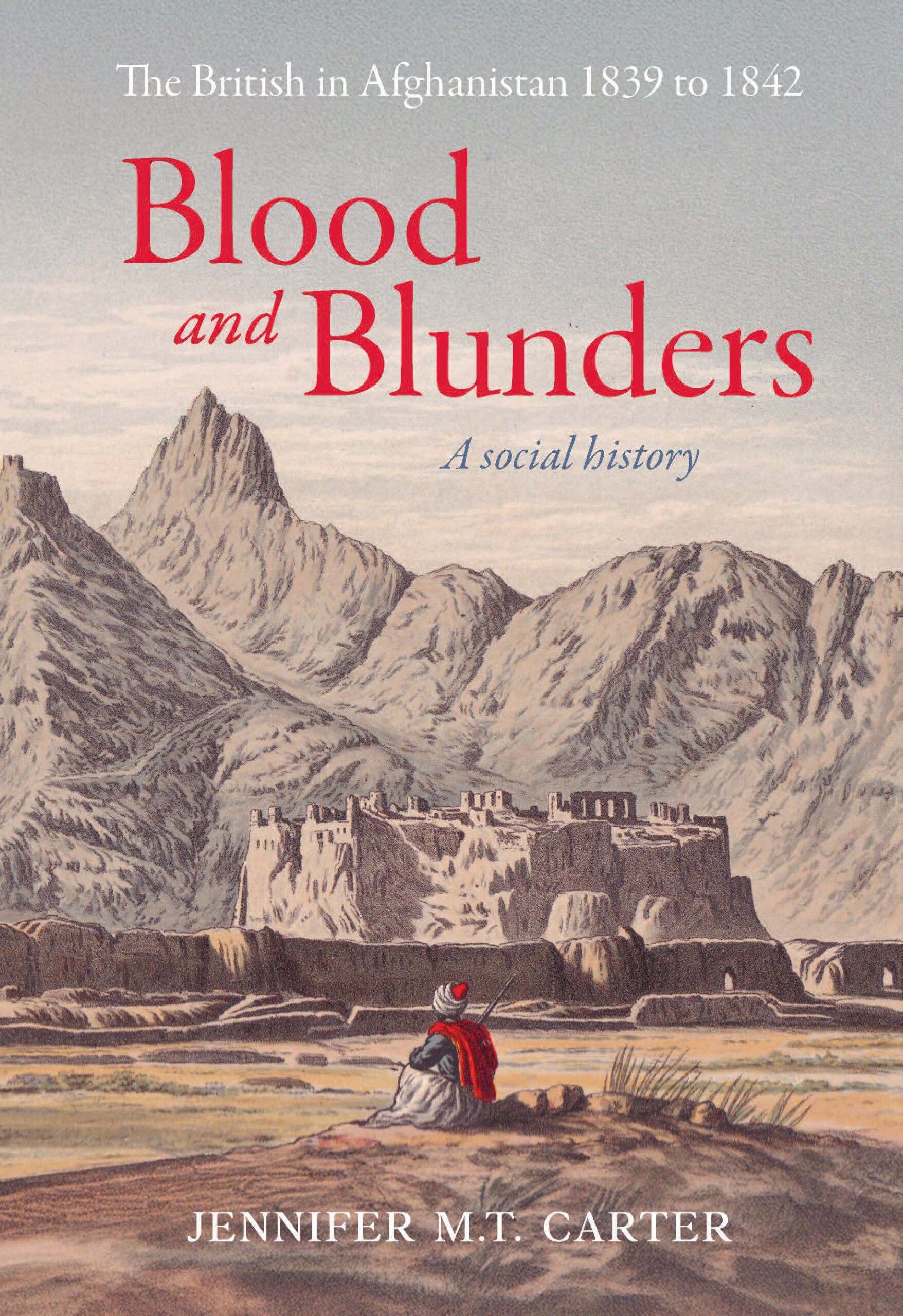
Blood and Blunders


The British in Afghanistan 1839 to 1842

Blood and Blunders tells the story of how ignorance, arrogance and greed destroyed the flower of a generation long before the tragedy of World War One.

The Honourable East India Company, the London-based trading company founded in 1600, could hardly have foreseen its remarkable success as it moved inexorably from commerce to conquest laying the foundations of Britain’s Indian Empire almost by accident. And, as everyone knows, the more you have, the more you must do to keep it. By the 1830s, a buffer was deemed necessary to counter Russia’s advance into Central Asia and prevent a move on British India from beyond the River Oxus. That buffer was Afghanistan. The British incursion at the end of 1838 replaced one Afghan ruler with another and has been termed The First Anglo-Afghan War; in effect it was little more than a shambles. Mismanaged and muddled diplomacy ensured the failure of what proved a totally dysfunctional campaign. Senior officers of the Royal army who last saw action with Wellington in 1815 commanded the so-called Army of the Indus; unable to adapt to local conditions as well as to each other, their petty jealousies and distrust of the local Company forces serving with them mar a bigger picture where individual feats of courage burn like beacons against the gloom of administrative incompetence.

Blood and Blunders gives a full picture of the Afghan experience at a time when the machinery of government called for unquestioning sacrifices from its operatives – and by extension, from their womenfolk and families, some of whom were present with the army. Throughout, tragedy and comedy march side by side and high politics as practised in London, Kabul and Calcutta lacks empathy for the Afghan people and is never far from farce.

Finally, Blood and Blunders throws fresh light on the disastrous Retreat from Kabul in January 1842 at the height of winter, and asks what is – and what is not – acceptable by way of retribution against people whose way of life is under threat.