ISBN 978-1-923763-19-7
PAPERBACK
ISBN 978-1-923763-20-3
HARDCOVER
ISBN 978-1-923763-21-0
EBOOK
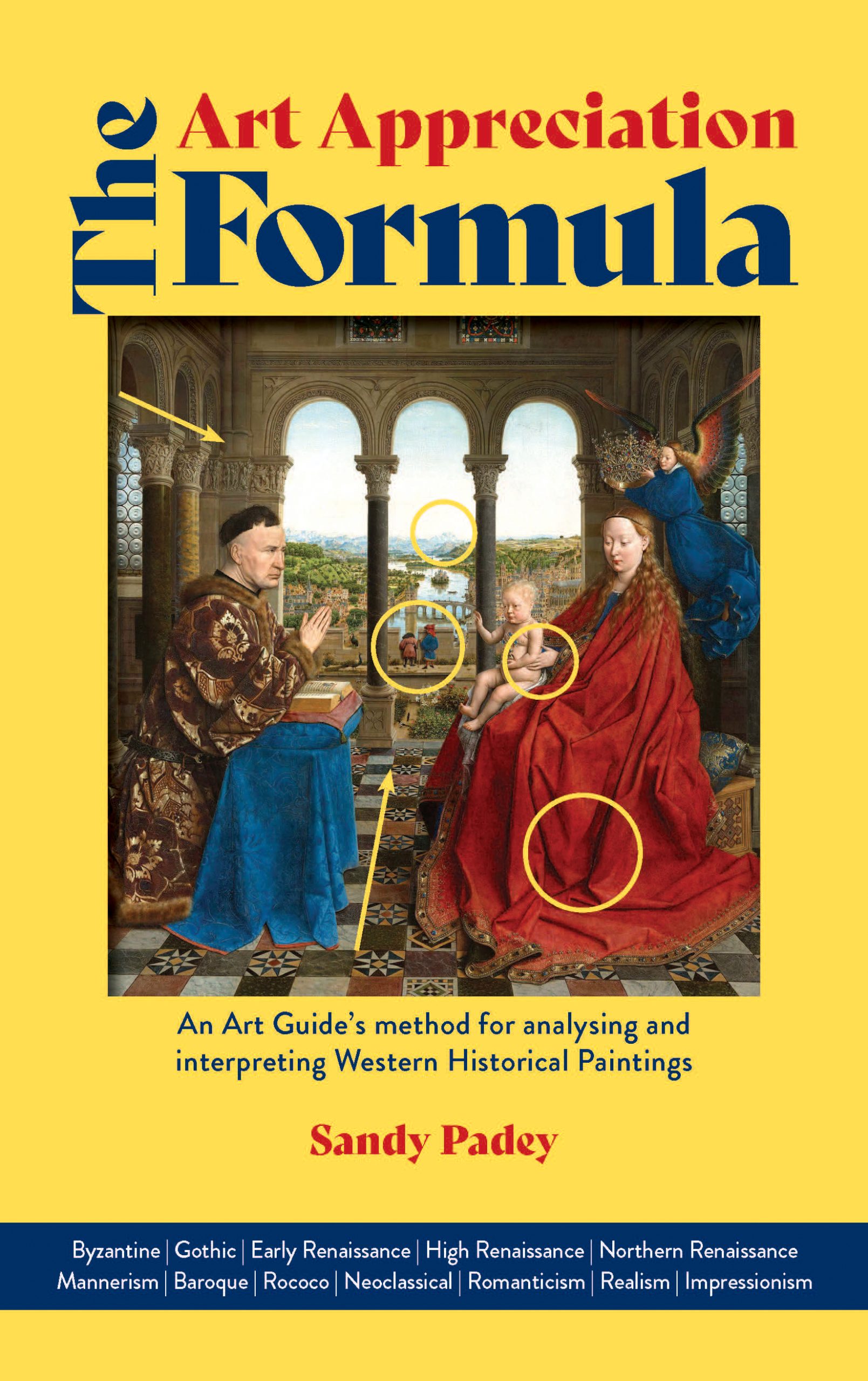
The Art Appreciation Formula
An Art Guide’s method for analysing and interpreting Western Historical Paintings
Written by an experienced museum guide, this book transforms Western Art Appreciation from a stuffy chore into an exhilarating, personal experience.
By prioritising insight over exhaustive facts, it provides a practical toolkit to analyse and interpret paintings confidently. Rejecting neutral documentation, the author encourages readers to defy popular opinion and develop unique, personal tastes. It ensures your next museum visit is deeply empowering and fulfilling.
Understand and interpret paintings:
- Features 100+ high-quality images
- Historical and religious context
- Painting characteristics
- Side-by-side comparisons of similar paintings
- How to identify painting genres and famous artists
- How to analyse and interpret paintings in 26 steps
What you will find in this book:
The book is organised into two main parts. The first one explains the various art genres, and the second teaches you to analyse and interpret paintings. Part 1 of the book covers the Western Art Timeline from 850 BCE through to 1885 CE. This involves understanding the various art genres and periods from the Greek Empire through to Impressionism in the 1800s. This includes the historical and political context of the different genres, which influenced their uniquely different styles. It gives you the skills to identify a painting’s genre and the signature styles of the most famous artists. Part 2 of the book features the Art Appreciation Toolkit, modelled on the author’s art tours, and teaches you to analyse and interpret paintings through two perspectives: Visual analysis and Understanding & Interpretation.
What’s different about this book:
It is not a neutral book that passively documents art. The content included and opinions expressed, including the paintings and artists featured, and indeed the relative volume of content of different topics, are based on the author’s own perception and preferences of which art he finds exceptional, sometimes against popular opinion. The reader is encouraged not to necessarily agree with these choices, but to use this “I’ll decide what’s amazing” approach to appreciate art in their own, deeply personal way (and not follow the herd).